
U.S. PHARMACEUTICAL MANUFACTURING
Navigate Tariffs, Strengthen Your Supply Chain, and Reshore with Confidence
The global pharmaceutical landscape is shifting rapidly. New pharmaceutical tariffs, increasing regulatory pressure, and ongoing disruption are forcing companies to rethink how and where they manufacture.
Understanding the Section 232 Tariff Framework
The U.S. government is advancing a Section 232 pharmaceutical tariff framework designed to strengthen domestic manufacturing of medicines, APIs, and key starting materials. This is not a temporary trade policy—it represents a structural shift in how pharmaceutical supply chains will operate going forward.
Applies to branded pharmaceuticals and APIs
Does not apply to generics or biosimilars
Designed to incentivize U.S.-based manufacturing
Tariff Structure: A Direct Incentive to Reshore
The policy introduces a tiered tariff reduction system tied directly to U.S. manufacturing commitments.
Baseline
Baseline tariff applied to imported branded drugs
~20%
Reduced with an approved U.S. onshoring plan
0%
Eliminated with onshoring + MFN pricing agreement
Companies that invest in reshoring manufacturing can significantly reduce—or eliminate—tariff exposure.
Bora Pharmaceuticals: Your Partner for U.S. Drug Manufacturing
Bora Pharmaceuticals is uniquely positioned to help companies transition from policy uncertainty to execution-ready U.S. manufacturing strategies.
Strategic Onshoring Guidance
We translate evolving policy into actionable manufacturing and supply chain strategies—helping you build government-ready onshoring plans.
Execution at Scale
- Established U.S.-based manufacturing capacity
- Scalable infrastructure for rapid production ramp-up
- Proven expertise in tech transfer and validation
End-to-End Support
- Supply chain redesign and optimization
- QA and regulatory transition support
- Program management for complex onshoring initiatives
We don’t just advise—we execute.
Our U.S. Manufacturing Facilities
Strategically located across the United States for comprehensive pharmaceutical manufacturing capabilities.
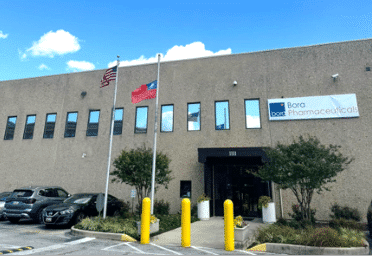
Baltimore-Camden, MD Facility
Sterile Injectable Fill/Finish Hub
87,000 sq. ft. facility
Four aseptic fill/finish lines
Lyophilization, vials, pre-filled syringes
Packaging, labeling, and inspection
On-site formulation and testing

Maple Grove, MN Facility
Oral Solid Dose, Powders & Liquids Hub
100,000 sq. ft. of customizable capacity
High-throughput oral solid dose manufacturing
Expertise in solvent handling and DEA-controlled drugs
On-site development labs and QC capabilities
Located in Medical Alley, the epicenter of U.S. health innovation
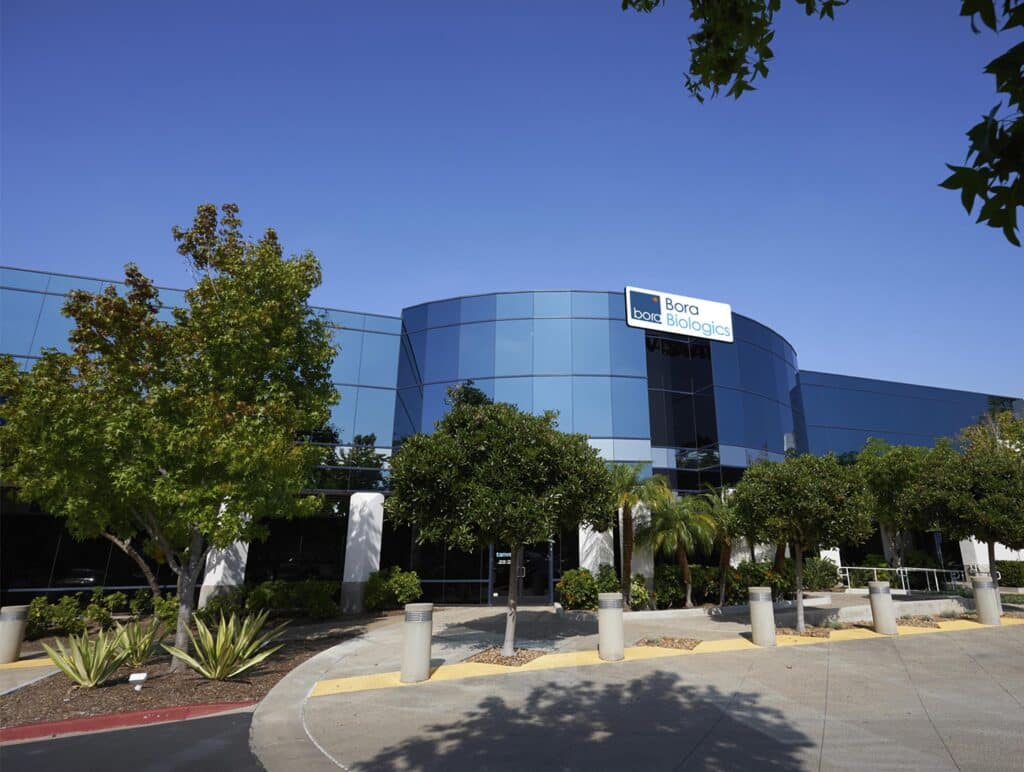
San Diego, CA Facility
Biologics Drug Substance Hub
Development through commercialization with Bora Biologics
Integration with Baltimore sterile fill/finish for seamless biologics scale-up
End-to-end biologics expertise, from formulation to delivery systems
A Strategic Turning Point for Pharmaceutical Companies
This policy forces a fundamental decision across the industry. Companies must choose how to respond:
Absorb Tariffs
Accept margin compression and pricing pressure in the U.S. market.
Restructure Supply Chain
Reconfigure global operations and accelerate U.S. manufacturing footprint expansion.
Federal Negotiation
Develop a credible onshoring roadmap and evaluate MFN pricing pathways.
For most organizations, the long-term advantage lies in building a more resilient, localized supply chain.
What It Takes to Build a Compliant U.S. Onshoring Plan
To secure tariff relief, pharmaceutical companies must present a robust, evidence-based onshoring strategy. Key requirements include:
Defined U.S.-bound product portfolio (SKUs)
Identified U.S. manufacturing sites
Capital investment (CapEx) and equipment plans
QA, regulatory, and compliance transition plans
A milestone-driven roadmap for production ramp-up
Current manufacturing footprint and supply chain mapping
Tech transfer and PPQ validation timelines
Workforce and staffing strategy
R&D transfer (if applicable)
This is where many companies face execution risk—bridging strategy to reality.
Build Resilient Pharmaceutical Supply Chain Management
Modern pharmaceutical supply chain management requires more than redundancy—it demands control, visibility, and proximity to key markets. U.S.-based manufacturing enables:
Reduced exposure to tariffs and trade volatility
Greater supply chain resilience and continuity
Faster response to market demand
Stronger regulatory alignment and oversight
Reshoring is no longer optional—it’s becoming a core pillar of competitive advantage.
Reshoring Manufacturing Without Disruption
Transitioning to drug manufacturing in the USA requires careful planning—but it doesn’t have to disrupt your business. Bora supports:
Seamless site transfers and tech transfers
Accelerated validation and commercialization timelines
Risk mitigation and supply continuity planning
Scalable production aligned to your growth
Our integrated approach ensures speed, compliance, and reliability
Recommended Actions: What Pharma Companies Should Do Now
The shift toward U.S. manufacturing is already underway. Companies that act early will have a clear advantage.
Assess Exposure
Identify U.S.-bound branded products at risk from tariffs
Scenario Plan
Compare tariff impact vs. onshoring vs. hybrid models
Initiate Feasibility
Evaluate U.S. manufacturing options and timelines
Engage Early
Partner with experts to build credible, government-aligned plans
Future-Proof Your Pharmaceutical Supply Chain
The Section 232 framework signals a long-term transformation—not a temporary disruption. Companies that move now can:
Minimize financial impact from pharmaceutical tariffs
Align with U.S. regulatory and policy priorities
Strengthen global and domestic supply chain resilience
Gain a lasting competitive advantage
Start Your U.S. Manufacturing Strategy
Bora Pharmaceuticals is ready to help you navigate this transition—from strategy through execution. Build your U.S. manufacturing roadmap today.